hey everyone! ok i know i always SAY my post will be short and it ends up being long but this time im serious! quick this week! so im not even like sure if were blogging anymore but id rather play it safe so here it is:
this week we did our super qiuck meteorology unit (and no, its not studying meteors) so when there was a sub we read an article about it and then did a page summary about it. then we talked about it when mr finley got back, we were talking about different air pressures and how they affect the weather, but if you were hanging out with me that day you know that i was basicly dead aaall day so i do get it but i cant provide you with as much information as i usually can. sorreez!!! then i was absent so i dont know what happened that day, but when i git back we did the experiemt where we hit the ruler and wrote down our observations. then we got the dreaded projects where we choose a career in science (mine was astronomer) research it, and then a whole bunch of stuff about it. it seemed like alot and if you sit by me you know i was reeeeally stressed! (thank you maggie for not getting mad at me bcuz my high stress level was making me moody and very terrible! i <3 u!) but its actually not as much as it seemed. the end of the year which is usually the least work is full of projects and they are finally coming to end sooo...applause for aproaching due dates! *claps* wooo! we have tomorrow and class on tuesday to work on it so thank you mr finley for giving us as much time as possible with the grades closing so very soon. i cant wait to see you all tomorrow! hug hug hug!
bi bi!!!
Sunday, June 14, 2009

Sunday, May 31, 2009
hey everyone!!! i hope you all enjoyed you saturday!!! so this week we had monday off woooo :) and then we continued with the two groups. in my group we had already taken notes on the documentary which was pretty much about people studying skeletons and stuff to draw conclusions about evolution and our ancestors. it was pretty interesting but i wasn't a big fan of the music ;) so the thing that my group did second was with the packet. The first part was that we took all the pictures and classified them into groupd, first two groups and then 5. The idea of that was to get our 5 groups to get close to the 5 kingdoms, which are Monera, an example would be single cell bacteria; protista, an example would be an animal cell like a paramecium; fungi, like funguses for example mushrooms; Plantea, which would be plants i guess; and animalia which would be animals with spines i think, like humans!!!
the next thing we had to do was answer the questions on the back and here is what i got for some of them, we also had to research carolus linnaeus and binomial nomenclature:
carolus linnaeus: s swedish naturalist* who proposed the modern system of binomial nominclature.
*naturalist- person who studies something in nature
binomial nomenclature- a system of nomenclature* (they used the word nomenclature in the definition of binomial nomclature?!) in which each spieces is given a unique name that consists of a generic (the genus) and specific (the species) ter.
*nomenclature- sets of names
its like the way they name a species like homo sapien or canis lupis, with the two latin terms. The purpose is for the classification of a species and the smaller groups inside a species. Like giving one name for the entire iguana family and then another different name for marine, land, and desert iguanas.
the sevsn classification groups from largest to smallest are: kingdom, phylum, class, order, family, genus, species.
human classification: kingdom: anamalia, phylum: cordata, class: mammalia, order: primates, family: hominidae, genus: homo, species: homo sapiens
the number of chracteristiccs shared by all member of a classification level changes as you prgress from species to kingdom by getting more and more because species is the most specific classification level and there are lots to be divided between and kingdom is the general and inclusive because there are only five to be divided between.
ok the end.
after that we we got one those memorizer things to help us remember the kingdoms. a numonic device or whatever. yeah i know, the spelling was WAY off...i think it starts with k or something but whatever, here it is
King
Philip (or peter if you cant remember that philip starts with p and not f)
Came
Over
For
Good
Spageti (i cant spell that either!!!)
then we got a super wuick lesson on th efood chain which goes like this:
Sun--->plants--->herbivore animals--->carnivore/omnivore animals--->decomposers--->
nutrients get returned to soil--->back to plants
so therefore all that humans can do is destroy plants and then destroyeverything.
food chain- flow of energy in a group
food web- flow of energy throughout a habititat, population, or community
then another wuick lessno on symbiotic relationships:
parasitic: host gets the negative effect and the organism gets the positive effect
mutualistic: both get a positive effect
commensalistic: host gets no effect at all and the organism gets a positive effect.
there is no situation where the host gets positive and the organism gets negative cuz no oragnism woul dput itself in a negative situation on purpose except a human
soooo that is the end of my blog!
i hope you all enjoy your sunday!!!
see you tomorrow!!!
hug! hug! hug!
HUG!!!
bi bi!!!
Monday, May 25, 2009
this week in science
this week in science was aaaaaaaaall about the different kinds of evolution. we started off by talking about gene flow which is change through migration like how poeple from different places each having certain traits reproduce a new group of people. and we talked about genetic drift which has to do with totally random chance. So a species gets wiped out but the reason it gets wiped out has nothing to do with a certain trait it posseses. Mr. finleys lovely little example was of two kinds of bugs (ill say blue and orange)
X X X X X
X X X X X and then tragicly a tree falls and kills all the orange bugs just by chance
and then it just so happens taht all the blue bugs have an AA blood type so all bugs that they reproduce (so the entire species) will have that blood type.
X X X X X
^all AA blood type
X+X=X all offspring AA blood type
ok.
so then we got into Lamarkian evolution
its the idea that if you try reeeeally hard you can change. its the theory of acquired characteristics. The other part of Lamarkian evolutioon is the theory of use and disuse.
for instance
if i never use my arms and neither does my future husband (hopefully jason mraz ;)) doesnt use his arms then our babies will cute little armless creepers.
obviously this theory does not make sense but thats because when Lamark came up with these theories he did not understand that traits were passed down through genes and that the traits he was talking about changing were not in your genes and therefore could not be passed down to your offspring.
we defined these terms in our notebook:
•selective breeding- a process by which humans select organisms with desired traits and breed them
^(UNnatural selection- humans are choosing rather than nature)
•Mutation- a DNA change
•Genetic drift- a random change occurance
-realted to an event
•Gene flow- a change through migration
•Genetic engineering- where someone goes in and changes someone or sometihng
and here are the original notes we took on genetic drift and gene flow. hopefully blogger will not distort them when i post this!!!
Gene flow
migration
change through migration
-variation
population large vs. small
^increase ^decrease
variation variation
Genetic Drift
Change
random chance
not related to benefits/costs
the destruction of a trait by random chance outside of the species, like natural disasters
nothing to do with benefits nesasrily
we also split the class in half to do either the documentary or learn about carrolus linneus (spelling?) and my group began with the documentary which i didnt get to quite finish yet because i was out friday which also means i dont have anything to say about the quiz yet. i am taking it monday so wish me luck!!!
please enjoy your monday off!!!
tonight is the season premeire of Jon and kate plus 8 which i am so excited to watch!!!
oh yeah--- check this video out its really funny!!! (link)
hug hug hug
bi bi!!!
X X X X X
X X X X X and then tragicly a tree falls and kills all the orange bugs just by chance
and then it just so happens taht all the blue bugs have an AA blood type so all bugs that they reproduce (so the entire species) will have that blood type.
X X X X X
^all AA blood type
X+X=X all offspring AA blood type
ok.
so then we got into Lamarkian evolution
its the idea that if you try reeeeally hard you can change. its the theory of acquired characteristics. The other part of Lamarkian evolutioon is the theory of use and disuse.
for instance
if i never use my arms and neither does my future husband (hopefully jason mraz ;)) doesnt use his arms then our babies will cute little armless creepers.
obviously this theory does not make sense but thats because when Lamark came up with these theories he did not understand that traits were passed down through genes and that the traits he was talking about changing were not in your genes and therefore could not be passed down to your offspring.
we defined these terms in our notebook:
•selective breeding- a process by which humans select organisms with desired traits and breed them
^(UNnatural selection- humans are choosing rather than nature)
•Mutation- a DNA change
•Genetic drift- a random change occurance
-realted to an event
•Gene flow- a change through migration
•Genetic engineering- where someone goes in and changes someone or sometihng
and here are the original notes we took on genetic drift and gene flow. hopefully blogger will not distort them when i post this!!!
Gene flow
migration
change through migration
-variation
population large vs. small
^increase ^decrease
variation variation
Genetic Drift
Change
random chance
not related to benefits/costs
the destruction of a trait by random chance outside of the species, like natural disasters
nothing to do with benefits nesasrily
we also split the class in half to do either the documentary or learn about carrolus linneus (spelling?) and my group began with the documentary which i didnt get to quite finish yet because i was out friday which also means i dont have anything to say about the quiz yet. i am taking it monday so wish me luck!!!
please enjoy your monday off!!!
tonight is the season premeire of Jon and kate plus 8 which i am so excited to watch!!!
oh yeah--- check this video out its really funny!!! (link)
hug hug hug
bi bi!!!
Sunday, May 17, 2009
this week....
OK im very sorry but there isnt much to say this time around because we mostly did the same thing as last week and i went over that in my last post. im pretty sure i went over all the population stuff but i guess ill just say that for sake of my grade on this entry...
all populations are dynamic, meaning they are always changing.
if it is static it is constant.
and then there is that oh so wonderful max capacity limit. This is when the population cannot go above a certain point

the max capacity is the line we drew above the lines representing the predator and prey population in our notes. I would totally put up a picture but unfortunately the pics that my camera takes take FOREVER to load and then they are massice so i cant.
the max capacity exists for these reasons:
1) when the population gets too high resources run low and organisms die off so guess what? its low again.
2) when they are too many of whatever animal in the species it gets overcrowded and disease spreads and they die down again.
3) preadators.....enough said.
this week we also looked at iguanas, i liked them alot better than the cockroaches so i was happy. we wrote down observations about the iguanas and were ablee to draw conclusions about homolegues structures (animals with similair structures) and it was that there several different kinds of iguanas but they are all iguanas because they shared a common ancestor. so maybe there was a regualr green iguana and from that after generations of evolution we got the land, forest, and marine iguanas. But you cant say that the marine iguana was once a green iguana, but it did share a common ancestor with it. it evolved from the green iguana, but it never was a green iguana, it was always a marine iguana. which brings us back to the idea that evolution occurs for a population, not an individual.
soooooo yeah.
we also had a quiz that i will not talk about until we get it back bcause knowing me i will say its easy and then fail so i dont want to jinx myself.
im sorry but i have nothing to talk about.
enjoy your weekend :)
hug hug hug
bi bi!!!


all populations are dynamic, meaning they are always changing.
if it is static it is constant.
and then there is that oh so wonderful max capacity limit. This is when the population cannot go above a certain point
the max capacity is the line we drew above the lines representing the predator and prey population in our notes. I would totally put up a picture but unfortunately the pics that my camera takes take FOREVER to load and then they are massice so i cant.
the max capacity exists for these reasons:
1) when the population gets too high resources run low and organisms die off so guess what? its low again.
2) when they are too many of whatever animal in the species it gets overcrowded and disease spreads and they die down again.
3) preadators.....enough said.
this week we also looked at iguanas, i liked them alot better than the cockroaches so i was happy. we wrote down observations about the iguanas and were ablee to draw conclusions about homolegues structures (animals with similair structures) and it was that there several different kinds of iguanas but they are all iguanas because they shared a common ancestor. so maybe there was a regualr green iguana and from that after generations of evolution we got the land, forest, and marine iguanas. But you cant say that the marine iguana was once a green iguana, but it did share a common ancestor with it. it evolved from the green iguana, but it never was a green iguana, it was always a marine iguana. which brings us back to the idea that evolution occurs for a population, not an individual.
soooooo yeah.
we also had a quiz that i will not talk about until we get it back bcause knowing me i will say its easy and then fail so i dont want to jinx myself.
im sorry but i have nothing to talk about.
enjoy your weekend :)
hug hug hug
bi bi!!!
Sunday, May 10, 2009
a post about (u guessed it) science!
this week we did 3 simulations, one was with moths, one was with these starburst things and the other was with the gupppies. Then we answered some questions about them on a google doc. Heres the link, (my group was group D) click here ladies and gents. We went over that in class and then we took notes on it.
but those are not the fiirst notes we took this week, we also took notes on adaption which i might have said last time but i dont remember so ill say it anyway :)
here is what i have in my notebook after this week:
Adaption- Changes in the physical structure or behavior of an orhanism that bet suits its environment and develps over time.
Examples of adaption:
•polar bears- white fur to blend in, black skin to absorb warmth
•Skunk- smell
•whale- breathing system
•birds-hollow bones
•penguins- oily surface, fins, webbed toes
•stick bug- camoflouge, looks like stick
•turtle- shell
•chamelion- changes color
•cheetah-speed
OK so there are like millions more but ill just leaveyou with that.
Processes by which we get adaptions:
+adapting
+evolving
+development
Here are notes from the simulation:
•If the environment changes too fast the organism will not be able to adapt
-adaption occurs over time
^natural selection (we will be startiing that unit soon)
•If you have an organism not suited to the environment they will die out
•if they ARE siuted to the environment they are more likley to survive and reprodduce
•change is gradual for a population
----then we had a picture of the relationship between the predators population and the prey's and it looked like a double helix---
•populations are "static" or "dynamic"
-static: constant
-dynamic: always changing
•if population is too high: -limited resources
-disease
•prey population low---> predators die----> prey goes up
OK the end!!! we will have more population notes on monday i think and i believe we will be starting natural selection next which apparantly is really intense.
so
happy mothers day!!! <3
enjoy your weekend
commen on my blog! ;)
Ok well HUG! HUG! HUG!
bi bi!!!
Sunday, April 26, 2009
Hello science nerds!!! ;)
Hello youngins. this week in science we put together an experiment within our tables focused on the physical, behavorial, and relationship traits of the cockroaches (icky!!!) the first 2 class periods we were coming up with the elements of our experiment, being a question to answer a hypothesis, prediction, and actual test. we also shared with the class our experiment and test andd helped each other fix the problems with the test and kind of fix our question so it was more detailed or relevant. my group was me maggie zeke and stephen s. our question o answer was what is their prefferred environment. our hypothesis was room temperature since Mr. Finley keeps them just in the back of the classroom. our test was to have a tray with under one side ice and the other a hot plate (those things can get HOT man!) and in the middle nothing so it was just room temp. then we would the cockroach in the center and the first time have it facing the hot. then cold, then room temp (it was a different bug each time). we would time the cockroach or 15 seconds and consider whichever part it stayed on for about 15 would be what we recorded, when we recorded we put down the temperature range.
sorry that was kinda confusing, i have to get better at keeping my thoughts in order :)
lastly we did presentations about our experiments, if you havent done yours yet heres some advice: only put small phrases in your presentation and use those to explain in detail with your mind and voice instead of just reading.
so we also got back our marking period grades, our project grades, nad our test grades. i did do well on all of those which i was very happy about because i worked hard for those grades i earned :)
i thawt the experiments were quick and alot easier than doing a lab report, if i had to change one thing about it i maybe would have asked for more time on the experiemt but most of all the presentation.
be careful with hot plates
appreciate your friendly neighborhood spiderman
listen to jason mraz songs (they are good for the soul) :)
give me many hugs
enjoy you sunday and the very summer like weather (a litle pressent from global warming)
bi bi!!!
in joy,
Kelso <3
Wednesday, April 15, 2009
camp speers
i really hope we really did have to do this bcuz i hate extra work :P plus id feel like a total idiot...lol so here we go...
we went to camp speers
it was fun
woooooooohooo
i am terrible @ archery
i shot the fence, the thing that holds the target, and the woods among other things.
here is what i learned
i learned about the pitcher plant. its a carniverous plant, like the venus fly trap, that gets its name from being shaped like (youll never guess) a pitcher.
i learned that in a bog things cannot decompose
to tie on to that we also learned about the bog man which is very very creepy D: the story is that they were taking out the bog so they cut down all the trees and people would bring home fire wood from there and some guy found a human hand in his (aaah!) and then they discovered the monk (cuz like i sed nothing can decompose) and they found out that he haqd been clubbed on the head and had eaten holly (poisonous!) and had probably been part of some sacrifice or sumtin. and he had everything but his bones because the bog like eats calcium or something....creepy
i learned how to make a good fire (allow lots of oxygen)
and how to make a good shelter with stuff in the woods. EI: wood and leaves. no duh
well, now that i have shared with you my wealth of knowledge, i am going to leave you...plz, dont cry (-_-) ;)
i will leave with this, spiderman is flippin AWESOME!!! ;)
HUG!!!
bi bi!!!
Friday, April 3, 2009
this sciencey week...
this was a really intense week of science :) we started off with turning in our projects, which i REALLY hope we all did well on! then come thursday there was test!!! we worked on it all period thursday but the majority of the class did not finish so we also had friday. I just finished cuuuz im in school right now ^_^ anyway, the test wasnt super easy but it wasnt really hard either. the thing im sure i did worst with was deffinently the meiosis mitosis stuff :P im really bad with that!!! anyway, to prepare me and a ton of other people went in to the study session wednesday morning which helped very much and i suggest going to those whenever you can even if you rthink you get it. we also started something this week that i couldnt hate anymore!!!!!!! we are doing observations on these huge disgusting cocroaches!!! so first of all let me tell you the notes we took on observations:
observation
+backround----> identify date, time, temp
+things we see ----->discuss in words/descriptions
+any 5 senses ----> NOT taste!
+microscopic observations as well as macroscopic
*microscopic: can not be seen with the baked eye, very small
*macroscopic: can be seen with the naked eye
+Identify pattern, trends, answer questions
+drawings
ok now that weve got that, here is what we did: each table was a group and we got this bucket thing containing the hideous creatures!!! each table got a huge one (eeew!) and a baby one. the babies were pretty much the really fast ones and the big ones just pooped and stuff. some of them tried to escape the bucket and the petri dish even. can i just say i think puttong them in the petri dishes is cruel? also bcuz they could suffocate if left on there too long. :( i dont like them but i wopuldnt want to hurt one either. juuust sayon. so yeah im pretty sure the only person more scared then me was steve s. lol. but yeah they were disgusting. the scariest part of all this is that one got lost. it is missong and i could be anywhere. i am so freaked out, and im not even kidding!!! when i find out who lost the cockroach i will hurt them! jkjk. ^ ^ but yeah, one really is missing.
so anyway, we spent the class observing them. here are the observations, me steve, maggie, and zeke got.
•the shell looks like wood
•the shell looks like its made of a bunch of sections
•the tops of the legs are white
•they can stick (meaning they stuck upside down to the top of the petri dish and can climb up things)
•they have six legs
•the legs have spikes
•the baby is lighter
•the bug is lighter on the bottom
•antena
then we made a cute little picture ^_^
those are only some bcuz of course i am so smart i forgot my notebook :P
so only some people could touch the bug, and even less could hold it. ellen is pretty much crazy bcuz she was carying it around in the palm of her hand!
ellen im sorry but you are crazy.
i cannot touch it, zeke had it in the petri dish an inch away from me and THAT made me scream.
i cannot touch it, i can barely look at it bcuz i HATE those big bugs. i hate dragonfly, those big flies, but most especially cicadas!!! i really only like ladybugs to be honest. but yeah.
so that was our excting time with the cockroaches. that i hate, you know in case i havent sed that enough times lol.
but yeah.
well, it is now that sad time when i have to leave you :( sooo
bi bi!!!
Sunday, March 29, 2009
genetic variety
hello ladies and gents! well this is the last part of my project i have to do so lets hope i do OK because i think so far i have done pretty good on everything else (i hope i didnt just jinx myself!) so i will talk about genetic variety in the reebops. here we go, cross your fingers that i dont do this totally wrong!
disclaimer: i did read cake's blog before writing this just to clear up some confusion so if you notice similarities i am trying very hard not to copy but at the same time i cant help it if SOME info is the same. i am NOT just rewriting her blog though, i am seriously not cheating off her blog and there is even a link to her blog somewhere down there sooo thats all...just wanted to mention that so i wasnt accused of copying.
OK so what genetic variety basically means (i think) is like how when we were finished creating all the reebops how each family was different because of all the different colored chromosomes we had. Like, i guess mine isnt a very good example because my family was very small because of how i mated it but oh well, i started out as a purple with a blue star and mated with a pink bug so the offspring's chromosomes were half purple* and half pink. then the purple* and pink bug mated with a bug whos chromosomes were orange and pink w/ purple polka dots, so the next bug had chromosmes that were purple*, pink, •pink•, and orange. so that is the variety, all the many colors.
OK i got this definition from cake's blog who got it from the msn encarta dictionary and its probably better than everything i just said. OK these are the defintions i found there.
1) specific type: a specific type or kind within a general group
2) collection of varied things: a collection of varied things, often belonging to the same general group
so yeah i know they both mean basically the same thing but having both it just kind of made more sense to me :) so i now see that what this means is that it is variation within a group of things that are all the same. like, they are all reebops BUT within a group that is entirely reebops there are different variations or kinds. like one of my reebops is yellow with red eyes black spots long spiked legs curved and feathered antena and wings. and although it is a reebop just like everyone elses someone else could have one that is brown with short legs and no dots and black eyes so they are all varied. and their chromosomes in the end will be different colors than mine so that is also varied. so in case i havent said it enough times the genetic variety is when you get the chromosomes from each parent (theres your genotype) and it is different, or varied from others genotypes, making every reebop look different at least a little bit.
OK lets get some pictures in here! here is some genetic variety for you:
i have blue eyes , my mom has brown
 , my dad has blue my sisters dad has brown., my sis has green.
 so my moms trait was not passed on to either of her kids, but my dads trait was passed on to me.
now my grandpa on moms side has blue eyes too so that trait could have skipped a generation, and my grandma on my stepdads side has green eyes like my sis to that trait could have skipped a generation too. so the question is how can+ = while
+= so say that my families chromosomes were all nice and color coded, we would probably look something like this:
Grandpa (moms side)= bb grandma (moms side)=BB
mom= Bb dad= bb stepdad=gB
kelsey(me!)= bb madelyn(sister)= gg
i really hope that there makes sense. it probably would make more sense of i knew what my stepgrandpa, and granparents on my dads side looked like but i dont so thats just too bad. and i figured what all the dominant and ressecive traits were just by knowing what chromosmes each person had to have and their phenotype (physical appearance) so it wasnt too hard. im also not sure that you can have co-recessive traits but since no one in my family has blue and brown eyes i dont think it can be any other way.
i really dont think this this blog turned out to good but i gave it my best shot and i promise next time i need pictures for something i will draw them myself ;)
i hope you didnt hate this post and i have to go and read some good old john tremain for social studies so fair well!
bi bi!!!
disclaimer: i did read cake's blog before writing this just to clear up some confusion so if you notice similarities i am trying very hard not to copy but at the same time i cant help it if SOME info is the same. i am NOT just rewriting her blog though, i am seriously not cheating off her blog and there is even a link to her blog somewhere down there sooo thats all...just wanted to mention that so i wasnt accused of copying.
OK so what genetic variety basically means (i think) is like how when we were finished creating all the reebops how each family was different because of all the different colored chromosomes we had. Like, i guess mine isnt a very good example because my family was very small because of how i mated it but oh well, i started out as a purple with a blue
star and mated with a pink bug so the offspring's chromosomes were half purple* and half pink. then the purple* and pink bug mated with a bug whos chromosomes were orange and pink w/ purple polka dots, so the next bug had chromosmes that were purple*, pink, •pink•, and orange. so that is the variety, all the many colors.OK i got this definition from cake's blog who got it from the msn encarta dictionary and its probably better than everything i just said. OK these are the defintions i found there.
1) specific type: a specific type or kind within a general group
2) collection of varied things: a collection of varied things, often belonging to the same general group
so yeah i know they both mean basically the same thing but having both it just kind of made more sense to me :) so i now see that what this means is that it is variation within a group of things that are all the same. like, they are all reebops BUT within a group that is entirely reebops there are different variations or kinds. like one of my reebops is yellow with red eyes black spots long spiked legs curved and feathered antena and wings. and although it is a reebop just like everyone elses someone else could have one that is brown with short legs and no dots and black eyes so they are all varied. and their chromosomes in the end will be different colors than mine so that is also varied. so in case i havent said it enough times the genetic variety is when you get the chromosomes from each parent (theres your genotype) and it is different, or varied from others genotypes, making every reebop look different at least a little bit.
OK lets get some pictures in here! here is some genetic variety for you:
i have blue eyes ,
my mom has brown , my dad has blue my sisters dad has brown., my sis has green. so my moms trait was not passed on to either of her kids, but my dads trait was passed on to me.now my grandpa on moms side has blue eyes too so that trait could have skipped a generation, and my grandma on my stepdads side has green eyes like my sis to that trait could have skipped a generation too. so the question is how can
+ = while+= so say that my families chromosomes were all nice and color coded, we would probably look something like this:Grandpa (moms side)= bb grandma (moms side)=BB
mom= Bb dad= bb stepdad=gB
kelsey(me!)= bb madelyn(sister)= gg
i really hope that there makes sense. it probably would make more sense of i knew what my stepgrandpa, and granparents on my dads side looked like but i dont so thats just too bad. and i figured what all the dominant and ressecive traits were just by knowing what chromosmes each person had to have and their phenotype (physical appearance) so it wasnt too hard. im also not sure that you can have co-recessive traits but since no one in my family has blue and brown eyes i dont think it can be any other way.
i really dont think this this blog turned out to good but i gave it my best shot and i promise next time i need pictures for something i will draw them myself ;)
i hope you didnt hate this post and i have to go and read some good old john tremain for social studies so fair well!
bi bi!!!
Saturday, March 28, 2009
RAWR
hello blog peeplz.....yeah so surprise!~ we have a test coming up!!! :O its on thursday and its on everything weve done for the genetics unit. Soooooo this SHOULD be a relatively short post cuz obviously i wan to work on my project. So this week in science class we got our project and we worked on it at home and in class. we made wiki pages which i hope i did right cuz i am terrible with computers!!! D: and we made some rebop (the name of our pretty little bugs) sperm and egg cells. can i just say i have made what are probably some of the prettiest sex cells I've ever seen? ^_^ lol. so yeah we also have to make a smart notebook video about punnett squares, which was fun cuz we got to wear those microphone things but also annoying bcuz I hate the sound of my own voice like, alot. but yeah. were doing a 1 to 2 page essay on meosis and mitosis and how they relate to the whole reebop thing. that is the main thing im NOT looking forward to because meosis and mitosis were the hardest for me...and we also have to do a blog entry on how genetic variety plays an important role in your reebop family. sooo yeah its pretty intense. and its due tuesday i believe. ^ ^ plz correct me if im wrong cuuuuuuz when doing a project its kinda important to know exactly when its due you know? yeah.all i have left to do is the blog and the report thingy. applause applause. so if anyone cares my genetic disease was tay sachs and i made the wiki and you can just click if you want to see it :) sorry this was so short and LAME but i havelots of work to do! hug hug hug! bi bi!!!
Saturday, March 14, 2009
dihybrid cross B^P
heeeeey so yeah this post is probably gonna be pretty short cuuuuuz i dont have much to say...yeah i no i say that alot but i think this time im actually right. sooooo yeah. so we have been doing genetics and all still but we started out this new thing its like a punnett square but its like huge! it is called a dyhibrid cross i belive. i also belive i spelled that terribly wrong. so anyway at first i didnt get them like at all but i guess for this entry ill just explain that :) s0 its pretty much used to determine the likelyhood for traits like a punnet square except this is for 2 traits rather than just one. hence the word "di". so what you do is instead of putting one letter or gene in each spot you put one pair. so say you were trying to determine the chances of a kid with blonde hair and blue eyes (hey thats me!) :) so lets say the blond is recessive and blue eyes are dominant. the mom will be heterozygous for hair (well say thats Bb) and has brown eyes so lets saaaaaay ee. and daddy has blonde hair bb and and heterozygous blue eyes Ee. so a dihybrid croos looks like this obviously:
 this one is filled in with some random genetic code but i thought it was a good example of what pretty much looks like. plus its color coded so yippee :)
so obviously the genotypes on the most outer edge of the picture are the genotypes the two parents and the the pairs in the circle are the different pairs that they can offer to their child. i cant remember the for it for some reason though so sorryz!
the genotypes in the boxes are all the possible genotypes for their children.
so wat you would do in our blondie stuation is first figure out the different combinations of genes each parent can offer. so since mom is Bb ee she can offer Be Be be & be OK so you put one pair to eache outer space just like in the picture except with finley you get boxes rather than circles to put them in. so you put a pair rather than just one letter like in a punnett square.
OK now the dad is bb eE so the different genotypes he can give are be be bE & bE. so put that on the other side of the dihybrid cross.
Now to determine the child just like a punnett square you do it like a graph and combine the genotypes in the boxes and record the result in the box where those match up (if that makes sense the way i said it....) so at first i though you just choose the dominant triat and put that in the box so you get a pair of two but actually you do like this, rather than tell ill just show you cuuuz im not good with directions most of the time :) ill use two of genotypes i just said there could be as an example:
bE+Be=bB Ee and you do that for all of them and you can see the genetic code for the kids nad see what they would look like--aka the phenotype :o sooo yeah there you go.
and that is my summary of the dihybrid cross :) sorry this post kinda stunk :P but watevs hughughug!
bi bi!!!
this one is filled in with some random genetic code but i thought it was a good example of what pretty much looks like. plus its color coded so yippee :) so obviously the genotypes on the most outer edge of the picture are the genotypes the two parents and the the pairs in the circle are the different pairs that they can offer to their child. i cant remember the for it for some reason though so sorryz!
the genotypes in the boxes are all the possible genotypes for their children.
so wat you would do in our blondie stuation is first figure out the different combinations of genes each parent can offer. so since mom is Bb ee she can offer Be Be be & be OK so you put one pair to eache outer space just like in the picture except with finley you get boxes rather than circles to put them in. so you put a pair rather than just one letter like in a punnett square.
OK now the dad is bb eE so the different genotypes he can give are be be bE & bE. so put that on the other side of the dihybrid cross.
Now to determine the child just like a punnett square you do it like a graph and combine the genotypes in the boxes and record the result in the box where those match up (if that makes sense the way i said it....) so at first i though you just choose the dominant triat and put that in the box so you get a pair of two but actually you do like this, rather than tell ill just show you cuuuz im not good with directions most of the time :) ill use two of genotypes i just said there could be as an example:
bE+Be=bB Ee and you do that for all of them and you can see the genetic code for the kids nad see what they would look like--aka the phenotype :o sooo yeah there you go.
and that is my summary of the dihybrid cross :) sorry this post kinda stunk :P but watevs hughughug!
bi bi!!!
Sunday, March 8, 2009
blogblogblog
heeeeeeey soooooooo im actually doing this instead of watching diary of a mad black woman so i hope at least one person actually reads this (-_-) hahaha jk, i mean i am missing it but i enjoy the computer and i also have to do some SS so its cool ;) anywhoo... onto the science!!! O:
we are talking about traits. still. traits. in science class.
its actually OK bcuz i do get it :) i mean not that i usually dont get stuff im just better at some things than i am at others. and this im alright at :) :) :)
so we have been doing this little trait thingy :) (hm, lots of smileys in this post :) )
i may have already talked about it im not sure but ill talk anyway :) my partner was dear sweet maggie. so we recorded our different traits which were: tongue rolling, widows peak (lily!!!) dimples earlobe attachment mid digit finger hair PTC taster ( i hate you PTC taster!!! go burn!!!) and cleft chin. aaaand we kinda just forgot about the hitch hikers thumb thing...i havve one and its kinda creepy O.O anywayz...we recorded our results (i hope you dont expect me to remember them.) and we put the whole classes results in excel which shockingly i knew how to do (im NOT good with computers!) and then made that into a graph (ours was pretty!) and we decided which we thought were dominant traits and which we thought were recessive traits. THEN we looked at a graph of the whole grade (well...the part of teh grade that has finley anyway, the COOL half!!! P: ) and compared it to the graph of the class and for period 2 science class they were relatively similar. some did changed a substantial amount but most didnt change all that much. as i just said. how repetive.
my printer just had a spazm!!!!
sorry random, but true it just spazzed out O.O
anyway
we had a good old time with that. so the other thing we did was in our tables we made some sperm and egg cells (mine were pretty!) and gave each a gene, mine was artisticness you see, and made punnet squares to predict the outcome. we put the sperms and eggs taht matched the genetypes we wrote down and pulled our random pairs to see if what we got matched our squares. yeah...you know what you did. we actually wrote it down in our note books too and this is what i wrote:
we put 2 eggs and two sperm of the same trait to represent each parent's genotype, then pull out the eggs and sperm in one by one in pairs of one egg & one sperm and recoreded the results, which would be the childrens genotype, and then did it again.
here is what my group of me (obviously), maggie, zeke, and micheal D.
micheal i am so sorry but i cant spell your first name.
so anyway maggies trait was green eyes which we said was a resecive trait and we made a punnet square that was this>>>
dad=gg mom=Gg children= Gg Gg gg gg
and when we did the experiment we got those results.
how magical.
then Micheals trait was height, as in tall, which he said was dominant and we made a punett square that looked like this>>> dad= AA mom=aa children=aA aA aA aA
and when we did the experiment we got that. ^^^^
Zekes trait was Athleticness (i realize this is not a word but that is just something you will have to deal with) he said it was Dominant. (guess i managed to be homozygous recessive ,THE MOST UNLIKELY GENOTYPE!!! RAWR!) we made a punnett square that told us this information>>>> dad=AA mom= aA children= aA aA AA AA
and when we did this experiment we got that.
and as i said my trait was artisticness (also not a word) a said it was a recessive trait and we made a square that said this>>> dad=aA mom=aA children=Aa AA aa aA and when we did the experiment we got that to which made me think that the punnett square was a nice accurate little thing and we wrote a cinclusion on it which is in the other post.
so also we did another spongebob sheet among other things wich i would go over but going over that stuff actually does take like forever and we already did go over it in class so....yeah...
well that is all i have to say about the wonderful world of science for today!!!
Jason Mraz is awesome!!!
aaand go look up "the call" by regina spektor bcuz that is one AWEOSME song! :P :P :) :) soooo yeah.
hughughug!
see you all tomorrow!
bi bi!!!
conclusion
here be my conclusion for science about the punnett squares..........you enjoy it......
The punnet square, according to this experiment, does work because all the results were what the punnett square predicted, so even though when we tried to make a punnet square to represent the family on little people big world (love that show!) and it didn't work i think the punnet square does work and there are just some special cases where it gets messed up.
yeah i know that was really short i really dont have much else to say about that.....im gonna do my blog entry now.....go read it when im done.
T_T
Sunday, March 1, 2009
behold the punnett square...yippee
hello friends. im not even sure if we have to blog this week but im gonna cuz maybe we do i dont want to have a missing assighnment weighing down my grade. I wish this blog was worth more than like 2 points!!! D: wh watever gets on to the science!!! sooooooooo first things first I want to apologize for an error in my pea blog, it doesnt matter if you choose the top dot or the bottom dot in the pea breeder thing, i thought it did so i was telling you which i chose but i found out in class it doesnt matter. ^ ^ anywhoo...i believe we did punnet squares and what not this fine week, soooo i'll start with the glorious square. weeeeee. SO its a lidl like lattice in a way (math people???) it is a square set up like when you draw a window on cruddy picture of a house: and then u list one chromosome pair (chromosome??? i think...) on top (like so ^) and then on the side. then you just match up the letter and put them in the square, like plotting points on a coordinate graph. eh-you get the point...
sooooo we did a real thrilling punnet square activity, wooooooo. we traced a traced a trait througth 3 generations of our fam and ill show you mine! :D yippee. uuuum mine was kinda screwy i think just so you know cuz of how my family is, as in i couldnt do one that showed me and my sister cuz we have diferent fathers, and i couldnt trace back my dads side of the family bcuz ive never met them, and obiously I couldnt just do my stepdads side of the fam cuz were not blood realated, so i did me, my moms parents, then my cousins on my moms side for the gemerations. wow you really didnt need the whole explaination did you??? (you: no Kelsey u stink!!! D:< ) im sorry! anyway, here are my results. i traced height and said tall was the dominant trait bcuz they are more tall people in the fam.
dad: TT mom: Tt = TT TT Tt Tt orange=me
pop: TT gram: tt = tT TT tT TT purple=mom red=uncle rich blue=aunt beth
uncle rich: tT aunt michelle: tt = tT tT tT tt pink=cuzin brad orange= cuzin jess
so i had to make e few assumptions bout homozygous and heterozygous to make it work but there you go. i really hope that made sense to you guys! they way i set it up is kinda confuzzling nad it will be even worse if stupid blogger goes and disorts it!!! D:< style="color: rgb(255, 153, 0);">QUESTION ONE!!! RAWR!!! for each genotype (vocab!) below indicate wether it is a homozygous (Ho) or heterozygous (he)
TT ho Bb He DD ho Ff he tt ho dd ho Dd he ff ho Tt he bb ho BB ho FF ho
*genotype- genetic code
*phenotype- physical appearance
which genotypes would be considered purebred? Homozygous ones because they have all the same genes
which would be considered hybrids? the heterozygous ones bcuz they have a mix of genes, some are just hidden.
Question 2!!! Determine teh phenotype using the info provided about spongebob
Yellow body color is dominant to blue
YY yellow Yy yellow yy blue
Square shape is dominant to round
SS square Ss square ss round
3!!!!! For each phenotype, give the genotypes that are possible for Patrick.
A tall (T) head is Dominant to short (t)
Tall= TT Tt Short= tt
Pink body color (P) is dominant to yellow (p)
PInk= PP Pp yellow= pp
4! Spongebob Squarepants recently met SpongeSusie Roundpants at a dance. Spongbob is heterozygous for his square shape but spongesusie is round. create a punnet square to show the possibilites if they had kids.
(So this means that she is homozygous.) i cant do the punnet square but ill tell you what i got.
A. List the possible genotypes and phenotypes for their children.
sS sS ss ss square, round.
B. What are the chances of a kid w/ a square shape?
2 out of 4 or 50%
C what are the chances of a kid with a round shape?
2 out of 4 or 50%
Patrick met patti @ the dance. both are heterozygous for their pink color, which is dominant over yellow. (im skipping the punnet square thing)
A. list possible genotypes and phenotypes for their children
PP Pp Pp pp pink yellow
B. what are the chances of a pink kid?
3 out of 4 or 75%
C. what are the chances of a yellow kid?
1 out of 4 or 25%
6. everyone in squidwards family has blue skin which is the dominant trait. His fam brags that they are purebred. He recently married a nice girl who has green skin which is the recessive trait. (skipping punnet square)
A. list possible genotypes and phenotypes for their kids.
bB bB bB bB green blue
B. what are the chances for a blue kid? 100%
C. What are the chances of a green kid? 0%
D. would squidwards kids still be considered purebred? explain!
no, because they would heterozygous, so there would still be a green gene in them, it just wouldnt show.
7. Assume that one of squidwards sons who is heterozygoud for his light blue color married a grl who was also heterozygous.
A. list possible genotypes and phenotypes for their children
bB bb BB Bb green blue
What are the chances of a kid w/ blue skin?
75%
what are the chances of a kid with green skin?
25%
Last question!!!this is hard to do without showing you the punnett square but the possible geno and phenotypes for their children are TT TT Tt Tt and they could only be tall so the hospital did make a mistake bcuz all the genotypes have @ least one dominant gene in them and tall eyeballs r dominant.
THE END!!! soooooooooooo that would be all. i have quite a bit of social studies to do so ive go to go!!!! hughughug!
bi bi!!!
and then u list one chromosome pair (chromosome??? i think...) on top (like so ^) and then on the side. then you just match up the letter and put them in the square, like plotting points on a coordinate graph. eh-you get the point...sooooo we did a real thrilling punnet square activity, wooooooo. we traced a traced a trait througth 3 generations of our fam and ill show you mine! :D yippee. uuuum mine was kinda screwy i think just so you know cuz of how my family is, as in i couldnt do one that showed me and my sister cuz we have diferent fathers, and i couldnt trace back my dads side of the family bcuz ive never met them, and obiously I couldnt just do my stepdads side of the fam cuz were not blood realated, so i did me, my moms parents, then my cousins on my moms side for the gemerations. wow you really didnt need the whole explaination did you??? (you: no Kelsey u stink!!! D:< ) im sorry! anyway, here are my results. i traced height and said tall was the dominant trait bcuz they are more tall people in the fam.
dad: TT mom: Tt = TT TT Tt Tt orange=me
pop: TT gram: tt = tT TT tT TT purple=mom red=uncle rich blue=aunt beth
uncle rich: tT aunt michelle: tt = tT tT tT tt pink=cuzin brad orange= cuzin jess
TT ho Bb He DD ho Ff he tt ho dd ho Dd he ff ho Tt he bb ho BB ho FF ho
*genotype- genetic code
*phenotype- physical appearance
which genotypes would be considered purebred? Homozygous ones because they have all the same genes
which would be considered hybrids? the heterozygous ones bcuz they have a mix of genes, some are just hidden.
Question 2!!! Determine teh phenotype using the info provided about spongebob
Yellow body color is dominant to blue
YY yellow Yy yellow yy blue
Square shape is dominant to round
SS square Ss square ss round
3!!!!! For each phenotype, give the genotypes that are possible for Patrick.
A tall (T) head is Dominant to short (t)
Tall= TT Tt Short= tt
Pink body color (P) is dominant to yellow (p)
PInk= PP Pp yellow= pp
4! Spongebob Squarepants recently met SpongeSusie Roundpants at a dance. Spongbob is heterozygous for his square shape but spongesusie is round. create a punnet square to show the possibilites if they had kids.
(So this means that she is homozygous.) i cant do the punnet square but ill tell you what i got.
A. List the possible genotypes and phenotypes for their children.
sS sS ss ss square, round.
B. What are the chances of a kid w/ a square shape?
2 out of 4 or 50%
C what are the chances of a kid with a round shape?
2 out of 4 or 50%
Patrick met patti @ the dance. both are heterozygous for their pink color, which is dominant over yellow. (im skipping the punnet square thing)
A. list possible genotypes and phenotypes for their children
PP Pp Pp pp pink yellow
B. what are the chances of a pink kid?
3 out of 4 or 75%
C. what are the chances of a yellow kid?
1 out of 4 or 25%
6. everyone in squidwards family has blue skin which is the dominant trait. His fam brags that they are purebred. He recently married a nice girl who has green skin which is the recessive trait. (skipping punnet square)
A. list possible genotypes and phenotypes for their kids.
bB bB bB bB green blue
B. what are the chances for a blue kid? 100%
C. What are the chances of a green kid? 0%
D. would squidwards kids still be considered purebred? explain!
no, because they would heterozygous, so there would still be a green gene in them, it just wouldnt show.
7. Assume that one of squidwards sons who is heterozygoud for his light blue color married a grl who was also heterozygous.
A. list possible genotypes and phenotypes for their children
bB bb BB Bb green blue
What are the chances of a kid w/ blue skin?
75%
what are the chances of a kid with green skin?
25%
Last question!!!
THE END!!! soooooooooooo that would be all. i have quite a bit of social studies to do so ive go to go!!!! hughughug!
bi bi!!!
Saturday, February 21, 2009
Peas and what not...
Hello my pets!!! before i turn you all into vampires, read about the pea experiment!!! bwahaha! OK i think that was the main thing we did these week...stuff about peas...sooooooo the first thing we did was the pea breeding (linklink!) which was when we chose two peas to breed and we came up with a hypothesis about it. mine was that the y's controlled the color and the r's controlled wether the pea was smooth or wrinkly. or maybe it was reversed.....well i think that was what I said...yeah Ok anyway...we bread (OK seriously how do you spell bred???!) 10 times and recorded the results and everything. the experiment i did is currently in my locker (oops!) so I'll do it right now and tell you what i get (cuz i just love you people that much ^_^ ) OK here we go: the letters outside the parenthesis are the buttins i chose from either pea btw,
Parents: (yY Rr ugly green, smooth) (yy rR bright green, smooth)
Babies: (yy Rr, bright green, smooth) (yy RR bright green, smooth) (Yy rr ugly green, wrinkly) ( Yy rR ugly green, smooth)
Parents: yy(yy Rr bright green, smooth) rr(Yy rr ugly green, wrinkly)
Babies: (yY Rr ugly green smooth) (yy Rr bright green smooth) (yY rr ugly green wrinkly) (yy rr bright green wrinkly)
Parents : yy(yy Rr bright green smooth) rr(yY rr ugly green wrinkly)
Babies: (yy Rr bright green smooth) (yY Rr ugly green smooth) (yy rr bright green wrinkly) (yY rr ugly green wrinkly)
Parents: yy(yy Rr bright green smooth) Rr(yY Rr ugly green smooth)
Babies: (yy RR bright green smooth) (yY Rr ugly green smooth) (yy rR bright green smooth) (yY rr ugly green wrinkly)
Parents: yy(yy RR bright green smooth) rr (yY rr ugly green wrinkly)
Babies: (yy Rr bright green smooth) (yY Rr ugly green smooth) (yy Rr bright green smooth) (yY Rr ugly green smooth)
Parents: Rr (yy Rr bright green smooth) yY(yY Rr ugly green smooth)
Babies: (yy RR bright green smooth) (yy rR bright green smooth) (Yy rR ugly green smooth) (Yy rr ugly green wrinkly)
Parents: yy(yy RR bright green smooth) rr(ugly green wrinkly)
Babies: (yY Rr ugly green smooth) (yy Rr bright green smooth) (yY Rr ugly green smooth) (yy Rr bright green smooth)
Parents: Rr (yy Rr bright green smooth) yY(yY Rr ugly green smooth)
Babies: (yy RR bright green smooth) (yy Rr bright green smooth) (Yy rR ugly green smooth) (Yy rr ugly green wrinkly)
Parents: RR(yy RR bright green smooth) Yy(Yy rr ugly green wrinkly)
Babies: (Yy rR ugly green smooth) (Yy rR ugly green smooth) (yy rR bright green smooth) (yy rR bright green smooth)
Parents: yy(yy rR bright green smooth) rR(yy rR bright green smooth)
Babies: (yy rr bright green wrinkly) (yy rR bright green smooth) (yy Rr bright green smooth) (yy RR bright green smooth)
and thats that! lol
OK the other pea thing we did was that slide show we took notes on (click the smileeeeeeeey!!!!) :-D , mine looked something like this:
Gregor Mendel
•Genetic breeder
•Swiss monk
•Daily work-peas
•theories are basis of inheritance theoreos 2day
•spotted inheritance in pea plants
•bred plants for certain features w/ each other
Inheritance
•all living organisms
•inheritance=inheriting characteristcs from parents
Characteristics in pea plants (I had have pix in my note book but i cant do that here)
• Flower color-pink or white
• stem length-tall or short
• pea color-yellow or green
• Pea shape-smooth or wrinkled
-2 allelles for each gene (characteristic ^)
----flower:
•pink+pink=pink
•white+white=white
•pink+white=pink
---pink=dominant (more powerful) allele
•pink flower w/ pink=white alleles=homozygote
•flower w/ pink=pink or white=white=heterozygote
Breeding
•each parent passes one allele
-random therefore --->
-•pink homozygote+pink homozygote can=pink or white flower
I hope that all makes sense to you guys!!! you might takenotes differently than me. if you have any questions just post a commment and ask!
OK so after that we played the game, is it just me or was that game like, addicting???!!! seriously! me and Sreesha played it like 20 times! it wasnt even that fun but it was serioiusly addictive! wth?! LOL ok so the point of the game is to choose the right parents to make a bunch of peas that look like the pic they give you of the pea plant they want. as i as playing it I didnt really get why the showed the pink and white dots when you clicked on a plant but the point of taht is taht they are showing you the alleles, so say tou have all pink plants and you are trying to produce a white one, you can see which ones are homozygotes and you can choose those and hope they pass the white allele. Got that? OK good.
soooooooooooooooooooooooooooooooooo thats pretty much all i have to say about peas! lol so your mission is to see that shopaholic movie cuz i saw it and it was BEAST! it really wasnt all superficial and just about shopping and stuff. it was REALLY good! sooooooo yeah...
OK also---i can now attach pictures of stuff! you know how im always complaining about how google images doesnt satisfy my scientific needs all that junk? weeeeeell NOW i have a digital camera (i like photography...) SOOOOOO i can just take pix of stuff, download them, and attach them to the post!!! WOOOO! soooo yeah im pretty much stating the obvious here but be proud!!! XD i hope you peeple are enjoying your vacation like crazy!!! oh and btw if anyone cares, every week along with a new post im gonna try to also have a new poll for you cuz i luv to see what you guys think of stuff! BTW how do NONE of you know what team jacob and team edward are???! My gosh!!! lol hahaha, sooo yeah, i missed some holidays SO here are my belated holiday greetings!!!
HAPPY VALENTINES DAY!!! (aka make the single people feel even worse about their singleness day ;P ) may you find your soulmates on this special day!
HAPPY PRESIDENTS DAY!!! appreciate your President people cuz hes not George bush anymore!
hughughug! see you all monday!!! bi bi!!!
Sunday, February 8, 2009
my oh my! we're doing mieosis!!! :O
hello blog peepl!!! :) SO in science class this week we began our journey into the exciting world of meiosis, aka sexual reproduction, WOO HOO. well lets see we made our prediction of how it works and unfortunately i cant give u pic of that but it was basically this: XX hahaha cleverly using the x's and greater/less than
X symbols to show you since i cant do pic! so smarticle!
> <>
this beautiful thing here came from brians blog which is deffinently worth checking out so too get there click please!
and if that doesn't work just go to blogs i follow and find it :P but yeah it was homolugues pairs, chromosome pairs, chromatid pairs...i think :o um just tell me if thats wrong and ill fix it ^_^
ok we also did the an activity pretty similair to the one we did for mitosis, u know that cells alive thing? her it is: linklink!
yeah ok.
well the activity we did was to do all the stages of the exciting process so heres what me and maggie got:
1) Interphase: regular cell (yippee)
2) prophase/prometaphase: chromosomes cross over
3) metaphase: spindle fibers line the homologues pairs in the middle of the cell.
4) anaphase: centromere splits and the sister chromotids are pulled apart
5) telophase: the cell starts to split into 2
6) cytokenesis: 2 cells are produced
7) interphase 2: 2 cells (oh, but it doesnt and there!) ;D
8) prophase/prometaphase 2: Centrosome and spindle fibers move to opposite poles
9) metaphase 2: spindle fibers line up chromosome in center of cell
10) anaphase: chromoatids seperate and begin moving away from the center
11) telophase 2: cells start to split
12) cytokenesis 2: 4 cells are produced
and thats that.
now if you look on the other side of that sheet there's the venn diagram thing comparing meiosis and mitosis this is what i did (yes, i realize we did this first, but if you know anything about me you know that i'm not at all orderly or organized so were doing it second) ;)
Meiosis: • sexual reproduction • combining of *2 cells • haploid cells • sperm&egg
mitosis: • asexual reproduction • splitting of *one cell • diploid cells
both: • reproduction • creating new organism • centrioles
we also did a few little definition type things but y dont we just skip that 4 all our happinesses??? ;) well thats alli got in me 4 today LOL so here are some links to a few blogs a heck of alot better than mine :) :) :)
if you want to see the wonderful universe of Cake click the red thingy!!! •
if you'd want to see Dan H's wonderful colorful blog click the blue thing! •
if you missed the link b4 click the green dot for brian C's blog! •
to see the razzle dazzle blog of robin click the purple dot!!! •
well thats all my pets, i will see you all tomorrow!
bi bi!!!
X symbols to show you since i cant do pic! so smarticle!
> <>

this beautiful thing here came from brians blog which is deffinently worth checking out so too get there click please!
and if that doesn't work just go to blogs i follow and find it :P but yeah it was homolugues pairs, chromosome pairs, chromatid pairs...i think :o um just tell me if thats wrong and ill fix it ^_^
ok we also did the an activity pretty similair to the one we did for mitosis, u know that cells alive thing? her it is: linklink!
yeah ok.
well the activity we did was to do all the stages of the exciting process so heres what me and maggie got:
1) Interphase: regular cell (yippee)
2) prophase/prometaphase: chromosomes cross over
3) metaphase: spindle fibers line the homologues pairs in the middle of the cell.
4) anaphase: centromere splits and the sister chromotids are pulled apart
5) telophase: the cell starts to split into 2
6) cytokenesis: 2 cells are produced
7) interphase 2: 2 cells (oh, but it doesnt and there!) ;D
8) prophase/prometaphase 2: Centrosome and spindle fibers move to opposite poles
9) metaphase 2: spindle fibers line up chromosome in center of cell
10) anaphase: chromoatids seperate and begin moving away from the center
11) telophase 2: cells start to split
12) cytokenesis 2: 4 cells are produced
and thats that.
now if you look on the other side of that sheet there's the venn diagram thing comparing meiosis and mitosis this is what i did (yes, i realize we did this first, but if you know anything about me you know that i'm not at all orderly or organized so were doing it second) ;)
Meiosis: • sexual reproduction • combining of *2 cells • haploid cells • sperm&egg
mitosis: • asexual reproduction • splitting of *one cell • diploid cells
both: • reproduction • creating new organism • centrioles
we also did a few little definition type things but y dont we just skip that 4 all our happinesses??? ;) well thats alli got in me 4 today LOL so here are some links to a few blogs a heck of alot better than mine :) :) :)
if you want to see the wonderful universe of Cake click the red thingy!!! •
if you'd want to see Dan H's wonderful colorful blog click the blue thing! •
if you missed the link b4 click the green dot for brian C's blog! •
to see the razzle dazzle blog of robin click the purple dot!!! •
well thats all my pets, i will see you all tomorrow!
bi bi!!!
Saturday, January 31, 2009
nothing to talk about!!!
Why hello there!!! this week i would like to talk about mitosis i think i kinda talked about it last week but this week i will go over it again! woo hoo. i no so exciting O_o this week i remembered my notebook again!!! so be proud!!! ;) i'd really like to keep this post short and sweet! last time i said it would be short but...it wasnt... O.O and now i am sad bcuz my cuzins hamster named butter just died and hes very sad :( :( :( poor brad!!!
alright here we go...
Mitosis- asexual reproduction
stages: interphase*
prophase
prometaphase*
metaphase
anaphase
telephase
cytokenesis*
*= can also be considered seperate from mitosis
to remember that Sreesha came up with a umm...oh wats it called? o yeah! she came up with an acronim (spelling?) to remember it:
interesting purple pumas make apple tart carefully
Interphase prophase Prometaphase Metaphase Anaphase Telephase Cytokenesis
its very hard to forget.
and to remember just the 4 stages i just think of PMAT
i will try to think of an acronim for that for all you wordy people. ill tell you wen i think of one
I already described the stages in my last post so...you can just reffer to that if you need that. WOW i am AWFUL at spelling today!!! so many of those little red lines!!! ;)
ACRONIM TIME!!!
People must adore tigers
i no, pure genius. ya kinda stinx but its hard to deny wen you look at this tiger!>>>>>

so there you go, people MUST adore tigers!!! Ok lets see...not much to talk about this week!
well we had a quiz...pretty sure i didnt do too well which is bad cuz we cant correct them!!! :O at least it was ALL multiple choice! i dont think i failed but the things i messed up are probably what happens at each of the different phases. :O :O :O :O ooh well.
i also dont think i failed the test but i will still correc it bcuz i also didnt ace it. SOMEONE still hasnt taken the test so we cant get it back!!! D:< i no who you are!!! take the darn test already!!! jk jk im not really mad :) i do no who it is tho. i think everyone does. i think shes taking it this week but im not sure. i hope so!!! i wanna no how i did!
anyway...i have to go clean my room :P :P :P i dont want to! sorry i didnt have a good post this week! just nothing NEW to talk about! i mean i would do the concept map but i cant bcuz i dont know how to put a concept map on a blog. :( ill see you all monday!!!
bi bi!!!
Sunday, January 25, 2009
hey hey!
why hello lovely blog readers! this week is gonna be a pretty short post i think, i ges i'll just go over what we have been doing in class. OK you guys are gonna be SO of me, i remembered my notebook!!!! yay! i no, im amazing, this means ill be able to give you guys all the wonderful details on reproduction!!! hahaha ok just bear with me poeple, we have to cover this sooner or later so lets just get it over with OK? ^_^ alright. OK first thing we did in this unit was Mr. Finley told us to write down everything we know about reproduction, (would my table care to explain y they all looked at ME to explain it?!) OK my table was a lidl apprehensive (great word!), so all we got was like, X chromosome, Y chromosome, boy+girl, and cells split in 1/2. nobody wanted to write down the obvious so, thats it. but that stuff IS important so i will be a wonderful lidl student and define it all for u! ur welcome! (haha jk)
Chromosomes- ONE pair determines the gender. XX= girl XY=boy, humans have (i think) 23 pairs per cell (feel free to correct me so i can change that) and they are basically just bunched up DNA.
Cell reproduction (basically what we were getting at)- cells must copy all chromosomes, DNA, organelles, then be big enough to split. mitosis, 8 steps: (ok some of this might be messed up so plz correct me. but this is pretty much straight of our worksheet) also-im sorry i cant get pictures for this but google images doesn't seem to be filling my scientific needs and i cant get the image of the website SO if u would like to see mytosis in action-heres the link- link link!
interpahase- regular cell oh how beautiful.
prophase- just starting to split, nucleas splitting
prometaphase- copying chromosomes
metaphase- DNA replication
anaphase- DNA splits
telephase- whole cell begins to split (OMG)
cytokenesis- everything is copied, cells are almost seperate
interphase-two regular cells how touching.
Ok next we shared our wealth of information with the class where we found some wonderful new terms, like, asexual. woo hoo. ok here we go,
asexual- an organism that does not need another organism to reproduce
egg cell- cell from female used for reproduction
sperm cell- cell from male used in reproduction
fertilization- reproduction process (or as a certain student would call it would call it, um, making a baby ;) dont worry, we still luv u)
Ok then. now rather then go into unnecasary detail, i'll go over the wkst.
u no, the onw with the root tip,
again, corrections are welcome.
1. why would a root tip have cells that are reproducing?
my answer- because it's at the end of the cell and can nutrients the easiest.
class approved answer- because that is where the plant is always growing
we're skipping 2
3. what is the pinkish dyed portion of the cell supposed to be?
i believe it could have been either pink, blue, or brown for you guys but u no wat i'm talking about so thats what matters.
my answer- nucleas, some of them are splitting, some have chromosomes.
class approved answer- chromosomes (i think)
skip 4 my pets
next side,
1. a sperm cell and egg cell each have 1/2 the number of chromosomes as a cheek. why do you think this is? (i dont have part 2 of this question)
my answer- Because a cheek celll comes from the complete organism and the sperm and agg cell are 2 parts of one whole organism so they have 1/2 the chromosomes so that the child has 100% of the chromosmes, if they had 100% each then their kid would be a weird creeper thing. also-cheek cells are asexual and split to produce unlike the egg and sperm.
class approved answer-well i was actually correct for that one so...
2. Cell Theory says that cells come from pre-existing cells. what must happen to a cell in order for this to be true?
answer- (do i really have to write it twice?) the cells have to split but contain enough parts to do so, copy all DNA, chromosomes, organelles, etc. etc. (interphase, prophase, prometaphase, metaphase, anaphase, telephase, cytokenesis, interphase)
3. We now that cells have lots of organelles within them as well as DNA. Where does the DNA cone from? where do you think the organelles come from?
answer- the cell it split from (remember, DNA replication, cell reproduction?)
4 is basically your speculation and we know the process already. 5 i have to go over again befor i can tell you.
well, i have a biography to write, a dog to play with, and test to study for so have a fun life and say hi to me on monday because...idk i just love wen people say hi 2 me ^ ^
also-in science PLZ just say hey to steve bcuz hes never gonna stop saying wats crackin?! until u do. hugz to all of you! bi bi!!!
Chromosomes- ONE pair determines the gender. XX= girl XY=boy, humans have (i think) 23 pairs per cell (feel free to correct me so i can change that) and they are basically just bunched up DNA.
Cell reproduction (basically what we were getting at)- cells must copy all chromosomes, DNA, organelles, then be big enough to split. mitosis, 8 steps: (ok some of this might be messed up so plz correct me. but this is pretty much straight of our worksheet) also-im sorry i cant get pictures for this but google images doesn't seem to be filling my scientific needs and i cant get the image of the website SO if u would like to see mytosis in action-heres the link- link link!
interpahase- regular cell
oh how beautiful.prophase- just starting to split, nucleas splitting
prometaphase- copying chromosomes
metaphase- DNA replication
anaphase- DNA splits
telephase- whole cell begins to split (OMG)
cytokenesis- everything is copied, cells are almost seperate
interphase-two regular cells
 how touching.
Ok next we shared our wealth of information with the class where we found some wonderful new terms, like, asexual. woo hoo. ok here we go,
asexual- an organism that does not need another organism to reproduce
egg cell- cell from female used for reproduction
sperm cell- cell from male used in reproduction
fertilization- reproduction process (or as a certain student would call it would call it, um, making a baby ;) dont worry, we still luv u)
Ok then. now rather then go into unnecasary detail, i'll go over the wkst.
u no, the onw with the root tip,
again, corrections are welcome.
1. why would a root tip have cells that are reproducing?
my answer- because it's at the end of the cell and can nutrients the easiest.
class approved answer- because that is where the plant is always growing
we're skipping 2
3. what is the pinkish dyed portion of the cell supposed to be?
i believe it could have been either pink, blue, or brown for you guys but u no wat i'm talking about so thats what matters.
my answer- nucleas, some of them are splitting, some have chromosomes.
class approved answer- chromosomes (i think)
skip 4 my pets
next side,
1. a sperm cell and egg cell each have 1/2 the number of chromosomes as a cheek. why do you think this is? (i dont have part 2 of this question)
my answer- Because a cheek celll comes from the complete organism and the sperm and agg cell are 2 parts of one whole organism so they have 1/2 the chromosomes so that the child has 100% of the chromosmes, if they had 100% each then their kid would be a weird creeper thing. also-cheek cells are asexual and split to produce unlike the egg and sperm.
class approved answer-well i was actually correct for that one so...
2. Cell Theory says that cells come from pre-existing cells. what must happen to a cell in order for this to be true?
answer- (do i really have to write it twice?) the cells have to split but contain enough parts to do so, copy all DNA, chromosomes, organelles, etc. etc. (interphase, prophase, prometaphase, metaphase, anaphase, telephase, cytokenesis, interphase)
3. We now that cells have lots of organelles within them as well as DNA. Where does the DNA cone from? where do you think the organelles come from?
answer- the cell it split from (remember, DNA replication, cell reproduction?)
4 is basically your speculation and we know the process already. 5 i have to go over again befor i can tell you.
well, i have a biography to write, a dog to play with, and test to study for so have a fun life and say hi to me on monday because...idk i just love wen people say hi 2 me ^ ^
also-in science PLZ just say hey to steve bcuz hes never gonna stop saying wats crackin?! until u do. hugz to all of you! bi bi!!!
Monday, January 19, 2009
Study guide :P
hey hey hey people! first of all, happy Martin Luther King Jr. Day!!! he was a very important person in history and therefore deserves to be celebrated! and on the 15th he would have turned 80 this fine 2009. But anyway, this week im gonna talk about what i have finished so far of our wonderful study guide. and NO it is NOT bcuz i am too chicken to talk about reproduction!!! but do you really want me to get into that anyway??? no, i didn't think so, plus the study guide is my main focus right now so i wanna talk bout that. TY! OK please please please correct me on any wrong info you see bcuz as you all know science is not usually my best subject! and plus i dont wanna study the wrong info! just TRY not make me feel really stupid wen you correct me! lol TY! OK so the first thing on this pretty lidl study guide is Types Of Cells i actually did my headings in pink for this one but obviously there is no pink txt option here on blogger so were gonna have to settle 4 purpl :( OK here we go:
Animal Vs. Plant:
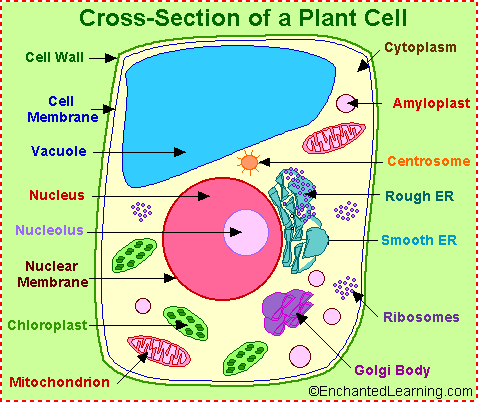 Plant cell (very cute ^ ^)
vs.
 animal cell
i used these pictures to help me be able to draw them.
Bacteria Cell
 remember this guy???
for this next one i made a T chart but i dont know how to make T chart on this so ill just do this:
Eukaryotic Prokaryotic
Nucleas no nucleas
organelles more layers of protection
bigger flagella
Cell structures-Organelles
Lysosomes- in the cytoplasm, digestive system of cell.
Smooth ER (endoplasmic reticullum)- Network of tubular membranes in the cytoplasm, transports materials, no ribosomes.
Rough ER- all of orange txt + studded with ribosomes.
Ribosome- protien manufacturerer
Nucleas- directs growth, metabolism, reproduction, genetic characters in eukaryotic cells.
cytoplasm- cell substance between cell membrane and nucleas.
mitochondria- in cytoplasm, functions in energy production
chloroplasts- in plant cells, contains chlorophylls, creates glucose through photosynthesis.
vacuole- small cavity on cytoplasm, bound by single membrane, contains water, food, and metabolic waste.
cell wall- boundary or wall around outside of plant cell.
cell membrane- "skin" of the cell
locomotive parts- help cell move, flagella, cilia
alrighty then! onto the blue section YAY
Nucliec bases- A) adenine
T) thymine
C) cytosine
G) guanine
U) uricil
nucliec base pairs- A-U
T-A
C-G
G-C
Sugar and phosphate strands-
 i think thi smight be the coolest thing i've ever seen in my whole life...
Shape- double helix
Animal Vs. Plant:
Plant cell (very cute ^ ^)vs.
animal celli used these pictures to help me be able to draw them.
Bacteria Cell
remember this guy???for this next one i made a T chart but i dont know how to make T chart on this so ill just do this:
Eukaryotic Prokaryotic
Nucleas no nucleas
organelles more layers of protection
bigger flagella
Cell structures-Organelles
Lysosomes- in the cytoplasm, digestive system of cell.
Smooth ER (endoplasmic reticullum)- Network of tubular membranes in the cytoplasm, transports materials, no ribosomes.
Rough ER- all of orange txt + studded with ribosomes.
Ribosome- protien manufacturerer
Nucleas- directs growth, metabolism, reproduction, genetic characters in eukaryotic cells.
cytoplasm- cell substance between cell membrane and nucleas.
mitochondria- in cytoplasm, functions in energy production
chloroplasts- in plant cells, contains chlorophylls, creates glucose through photosynthesis.
vacuole- small cavity on cytoplasm, bound by single membrane, contains water, food, and metabolic waste.
cell wall- boundary or wall around outside of plant cell.
cell membrane- "skin" of the cell
locomotive parts- help cell move, flagella, cilia
alrighty then! onto the blue section YAY
Nucliec bases- A) adenine
T) thymine
C) cytosine
G) guanine
U) uricil
nucliec base pairs- A-U
T-A
C-G
G-C
Sugar and phosphate strands-
i think thi smight be the coolest thing i've ever seen in my whole life...Shape- double helix
DNA vs. RNA
DNA RNA
DNA RNA
dioxyribose nucliec acid ribonucliec acid
dioxyribose sugar ribose sugar (ges that makes sense)
adenine adenine
thymine uricil
cytosine cytosine
guanine guanine
double helix single strand
chemical code to transcibe
Transfer RNA- picks up unnatached amino acid within cell cytoplasm.
DNA replication- When a DNA molecule copies itself and forms a copy of itself
(1) DNA copies and transmits genetic info
(2) each strand acts as template for duplicate
(3) DNA splits to form 2 new molecules
Cell functions-protien synthesis (these next sectiona are where i started to get confused)
(1) Transcription- the cell copies the gene sequence in to mRNA (messenger RNA)
(2) Translation- ribosome reads mRNA sequence.
(3) translates into amino acid sequence of protien
(4) reads nucloids
(5) reads until stop codon
(i skipped where thw different sub processes occur, anyone wanna fill me in on dat one??? lol)
relationship between amino acids and protiens- the amino acids are the biulding blocks of the protiens.
Cell functios- Photosynthesis- occurs in chloroplasts
Process- 1) sunlight shines on green parts of plant
2) inside chloroplast CO2 and H2O (carbon dioxide and water) are combined
3) which turns glucose in to energy
Chemical formula- 6CO2+6H2O---light energy------>C6H12O6+6O2
Glucose- C6H12O6
Glucose and cellulose- Difference- Glucose is used for food, cellulose is used for the structure of the cell wall.
Cellulose is important because w/o it the cell would have no cell wall and no protection..
Recycling- The same plant can recycle it's own waste (ew) because photosynthesis and cell resperation have reversed products and reactants.
this next section is cell functions resperation and fermentation which what i had the most trouble with so 4 now im gonna skip it and save it for the end.
Trophic levels annd the energy pyramid-
 this is the might energy pyramid.
Autotroph- plants, first level of energy pyramid, gets energy and food from sun
Primary consumer- 2nd level, plant eater (herbivores of the world... like me! ^_^)
Secondary consumer- 3rd level of pyramid, meat eaters, eaters of primary consumers, carnivores (like......................a penguin)
tertiary consumer- (tertiary is one of the funniest words i have ever heard! XD ) 4th level of pyramid, eater of plants and animals, omnivore, (like most humans)
10% of energy passes to each level rather than 100% because the plant or animal being eaten has already been using the other 90% of their energy to walk around, hunt eat more, reproduce, and other various activities.
Calculate energy (joules)- alrighty rather then copy of my energy pyramid im gonna show you all the mad skills that got me in enriched math and do it myself O.o
OK lets say the plant (or autotroph) starts of with 12000 joules of energy from Mr. Sun.
Next, an animal (im not even gonna TRY to make up a real situation like last time bcuz that made NO sense!!! hahaha) eats the plant and gets 10% of it's energy so the herbivore animal (primary consumer) now has 1200 joules of energy. then a carnivore animal, (secondary consumer) eats the 1st animal :( and gets 10% of that energy. so they now have 120 joules of energy. and lastly a tertiary (teehee) consumer or omnivore eats that animal (whatever it may be) so they get 10% of energy so they only have 12 joules of energy.
Perhaps we have solved the mystery of the couch potatoe.
and also why it took my family like 15 minutes to catch that chipmunk that was in our house that one time, apparantly the chipmunk was way more energetic then us.
Particle pictures of air and water-
water-
 sorry, but this is the best i could do :( basicly the point of the water particle picture is to say that all kinds of stuff, like hydrogen, oxygen, light energy, and all kinds of different chemicals can be found in water moving around---this pic does NOT show all of them.
Air- when i tried to find this all i got was a bunch tanks, air conditioners and motors...but the point of drawing this in class was to show us that the actual amount of oxygen in the air is a very small percentage.
OK i think this post is MORE than long enough already so maybe i'll just save cell resperation and fermentation for another time :) i just had kind of a hard time writing down the actual step by step process. OK thats all for now!!! have agr8 rest of the weekend! and if u get bored, go watch a good Harry Potter movie on the Spanish channel! trust me its hilarious! see you all 2morrow!
bi bi!!!
dioxyribose sugar ribose sugar (ges that makes sense)
adenine adenine
thymine uricil
cytosine cytosine
guanine guanine
double helix single strand
chemical code to transcibe
Transfer RNA- picks up unnatached amino acid within cell cytoplasm.
DNA replication- When a DNA molecule copies itself and forms a copy of itself
(1) DNA copies and transmits genetic info
(2) each strand acts as template for duplicate
(3) DNA splits to form 2 new molecules
Cell functions-protien synthesis (these next sectiona are where i started to get confused)
(1) Transcription- the cell copies the gene sequence in to mRNA (messenger RNA)
(2) Translation- ribosome reads mRNA sequence.
(3) translates into amino acid sequence of protien
(4) reads nucloids
(5) reads until stop codon
(i skipped where thw different sub processes occur, anyone wanna fill me in on dat one??? lol)
relationship between amino acids and protiens- the amino acids are the biulding blocks of the protiens.
Cell functios- Photosynthesis- occurs in chloroplasts
Process- 1) sunlight shines on green parts of plant
2) inside chloroplast CO2 and H2O (carbon dioxide and water) are combined
3) which turns glucose in to energy
Chemical formula- 6CO2+6H2O---light energy------>C6H12O6+6O2
Glucose- C6H12O6
Glucose and cellulose- Difference- Glucose is used for food, cellulose is used for the structure of the cell wall.
Cellulose is important because w/o it the cell would have no cell wall and no protection..
Recycling- The same plant can recycle it's own waste (ew) because photosynthesis and cell resperation have reversed products and reactants.
this next section is cell functions resperation and fermentation which what i had the most trouble with so 4 now im gonna skip it and save it for the end.
Trophic levels annd the energy pyramid-
this is the might energy pyramid.Autotroph- plants, first level of energy pyramid, gets energy and food from sun
Primary consumer- 2nd level, plant eater (herbivores of the world... like me! ^_^)
Secondary consumer- 3rd level of pyramid, meat eaters, eaters of primary consumers, carnivores (like......................a penguin)
tertiary consumer- (tertiary is one of the funniest words i have ever heard! XD ) 4th level of pyramid, eater of plants and animals, omnivore, (like most humans)
10% of energy passes to each level rather than 100% because the plant or animal being eaten has already been using the other 90% of their energy to walk around, hunt eat more, reproduce, and other various activities.
Calculate energy (joules)- alrighty rather then copy of my energy pyramid im gonna show you all the mad skills that got me in enriched math and do it myself O.o
OK lets say the plant (or autotroph) starts of with 12000 joules of energy from Mr. Sun.
Next, an animal (im not even gonna TRY to make up a real situation like last time bcuz that made NO sense!!! hahaha) eats the plant and gets 10% of it's energy so the herbivore animal (primary consumer) now has 1200 joules of energy. then a carnivore animal, (secondary consumer) eats the 1st animal :( and gets 10% of that energy. so they now have 120 joules of energy. and lastly a tertiary (teehee) consumer or omnivore eats that animal (whatever it may be) so they get 10% of energy so they only have 12 joules of energy.
Perhaps we have solved the mystery of the couch potatoe.
and also why it took my family like 15 minutes to catch that chipmunk that was in our house that one time, apparantly the chipmunk was way more energetic then us.
Particle pictures of air and water-
water-
sorry, but this is the best i could do :( basicly the point of the water particle picture is to say that all kinds of stuff, like hydrogen, oxygen, light energy, and all kinds of different chemicals can be found in water moving around---this pic does NOT show all of them.Air- when i tried to find this all i got was a bunch tanks, air conditioners and motors...but the point of drawing this in class was to show us that the actual amount of oxygen in the air is a very small percentage.
OK i think this post is MORE than long enough already so maybe i'll just save cell resperation and fermentation for another time :) i just had kind of a hard time writing down the actual step by step process. OK thats all for now!!! have agr8 rest of the weekend! and if u get bored, go watch a good Harry Potter movie on the Spanish channel! trust me its hilarious! see you all 2morrow!
bi bi!!!
Subscribe to:
Posts (Atom)