Animal Vs. Plant:
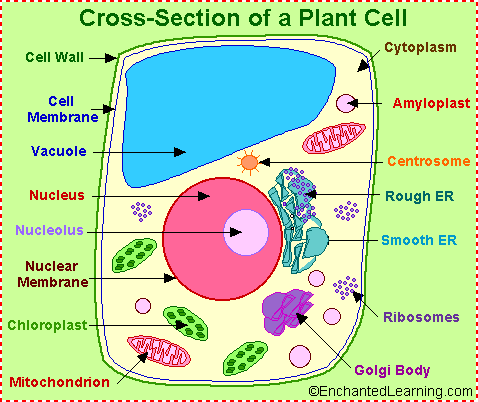 Plant cell (very cute ^ ^)
vs.
 animal cell
i used these pictures to help me be able to draw them.
Bacteria Cell
 remember this guy???
for this next one i made a T chart but i dont know how to make T chart on this so ill just do this:
Eukaryotic Prokaryotic
Nucleas no nucleas
organelles more layers of protection
bigger flagella
Cell structures-Organelles
Lysosomes- in the cytoplasm, digestive system of cell.
Smooth ER (endoplasmic reticullum)- Network of tubular membranes in the cytoplasm, transports materials, no ribosomes.
Rough ER- all of orange txt + studded with ribosomes.
Ribosome- protien manufacturerer
Nucleas- directs growth, metabolism, reproduction, genetic characters in eukaryotic cells.
cytoplasm- cell substance between cell membrane and nucleas.
mitochondria- in cytoplasm, functions in energy production
chloroplasts- in plant cells, contains chlorophylls, creates glucose through photosynthesis.
vacuole- small cavity on cytoplasm, bound by single membrane, contains water, food, and metabolic waste.
cell wall- boundary or wall around outside of plant cell.
cell membrane- "skin" of the cell
locomotive parts- help cell move, flagella, cilia
alrighty then! onto the blue section YAY
Nucliec bases- A) adenine
T) thymine
C) cytosine
G) guanine
U) uricil
nucliec base pairs- A-U
T-A
C-G
G-C
Sugar and phosphate strands-
 i think thi smight be the coolest thing i've ever seen in my whole life...
Shape- double helix
DNA vs. RNA
DNA RNA
DNA RNA
dioxyribose nucliec acid ribonucliec acid
dioxyribose sugar ribose sugar (ges that makes sense)
adenine adenine
thymine uricil
cytosine cytosine
guanine guanine
double helix single strand
chemical code to transcibe
Transfer RNA- picks up unnatached amino acid within cell cytoplasm.
DNA replication- When a DNA molecule copies itself and forms a copy of itself
(1) DNA copies and transmits genetic info
(2) each strand acts as template for duplicate
(3) DNA splits to form 2 new molecules
Cell functions-protien synthesis (these next sectiona are where i started to get confused)
(1) Transcription- the cell copies the gene sequence in to mRNA (messenger RNA)
(2) Translation- ribosome reads mRNA sequence.
(3) translates into amino acid sequence of protien
(4) reads nucloids
(5) reads until stop codon
(i skipped where thw different sub processes occur, anyone wanna fill me in on dat one??? lol)
relationship between amino acids and protiens- the amino acids are the biulding blocks of the protiens.
Cell functios- Photosynthesis- occurs in chloroplasts
Process- 1) sunlight shines on green parts of plant
2) inside chloroplast CO2 and H2O (carbon dioxide and water) are combined
3) which turns glucose in to energy
Chemical formula- 6CO2+6H2O---light energy------>C6H12O6+6O2
Glucose- C6H12O6
Glucose and cellulose- Difference- Glucose is used for food, cellulose is used for the structure of the cell wall.
Cellulose is important because w/o it the cell would have no cell wall and no protection..
Recycling- The same plant can recycle it's own waste (ew) because photosynthesis and cell resperation have reversed products and reactants.
this next section is cell functions resperation and fermentation which what i had the most trouble with so 4 now im gonna skip it and save it for the end.
Trophic levels annd the energy pyramid-
 this is the might energy pyramid.
Autotroph- plants, first level of energy pyramid, gets energy and food from sun
Primary consumer- 2nd level, plant eater (herbivores of the world... like me! ^_^)
Secondary consumer- 3rd level of pyramid, meat eaters, eaters of primary consumers, carnivores (like......................a penguin)
tertiary consumer- (tertiary is one of the funniest words i have ever heard! XD ) 4th level of pyramid, eater of plants and animals, omnivore, (like most humans)
10% of energy passes to each level rather than 100% because the plant or animal being eaten has already been using the other 90% of their energy to walk around, hunt eat more, reproduce, and other various activities.
Calculate energy (joules)- alrighty rather then copy of my energy pyramid im gonna show you all the mad skills that got me in enriched math and do it myself O.o
OK lets say the plant (or autotroph) starts of with 12000 joules of energy from Mr. Sun.
Next, an animal (im not even gonna TRY to make up a real situation like last time bcuz that made NO sense!!! hahaha) eats the plant and gets 10% of it's energy so the herbivore animal (primary consumer) now has 1200 joules of energy. then a carnivore animal, (secondary consumer) eats the 1st animal :( and gets 10% of that energy. so they now have 120 joules of energy. and lastly a tertiary (teehee) consumer or omnivore eats that animal (whatever it may be) so they get 10% of energy so they only have 12 joules of energy.
Perhaps we have solved the mystery of the couch potatoe.
and also why it took my family like 15 minutes to catch that chipmunk that was in our house that one time, apparantly the chipmunk was way more energetic then us.
Particle pictures of air and water-
water-
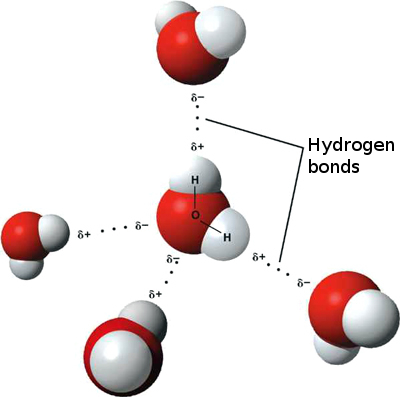 sorry, but this is the best i could do :( basicly the point of the water particle picture is to say that all kinds of stuff, like hydrogen, oxygen, light energy, and all kinds of different chemicals can be found in water moving around---this pic does NOT show all of them.
Air- when i tried to find this all i got was a bunch tanks, air conditioners and motors...but the point of drawing this in class was to show us that the actual amount of oxygen in the air is a very small percentage.
OK i think this post is MORE than long enough already so maybe i'll just save cell resperation and fermentation for another time :) i just had kind of a hard time writing down the actual step by step process. OK thats all for now!!! have agr8 rest of the weekend! and if u get bored, go watch a good Harry Potter movie on the Spanish channel! trust me its hilarious! see you all 2morrow!
bi bi!!!
dioxyribose sugar ribose sugar (ges that makes sense)
adenine adenine
thymine uricil
cytosine cytosine
guanine guanine
double helix single strand
chemical code to transcibe
Transfer RNA- picks up unnatached amino acid within cell cytoplasm.
DNA replication- When a DNA molecule copies itself and forms a copy of itself
(1) DNA copies and transmits genetic info
(2) each strand acts as template for duplicate
(3) DNA splits to form 2 new molecules
Cell functions-protien synthesis (these next sectiona are where i started to get confused)
(1) Transcription- the cell copies the gene sequence in to mRNA (messenger RNA)
(2) Translation- ribosome reads mRNA sequence.
(3) translates into amino acid sequence of protien
(4) reads nucloids
(5) reads until stop codon
(i skipped where thw different sub processes occur, anyone wanna fill me in on dat one??? lol)
relationship between amino acids and protiens- the amino acids are the biulding blocks of the protiens.
Cell functios- Photosynthesis- occurs in chloroplasts
Process- 1) sunlight shines on green parts of plant
2) inside chloroplast CO2 and H2O (carbon dioxide and water) are combined
3) which turns glucose in to energy
Chemical formula- 6CO2+6H2O---light energy------>C6H12O6+6O2
Glucose- C6H12O6
Glucose and cellulose- Difference- Glucose is used for food, cellulose is used for the structure of the cell wall.
Cellulose is important because w/o it the cell would have no cell wall and no protection..
Recycling- The same plant can recycle it's own waste (ew) because photosynthesis and cell resperation have reversed products and reactants.
this next section is cell functions resperation and fermentation which what i had the most trouble with so 4 now im gonna skip it and save it for the end.
Trophic levels annd the energy pyramid-
this is the might energy pyramid.Autotroph- plants, first level of energy pyramid, gets energy and food from sun
Primary consumer- 2nd level, plant eater (herbivores of the world... like me! ^_^)
Secondary consumer- 3rd level of pyramid, meat eaters, eaters of primary consumers, carnivores (like......................a penguin)
tertiary consumer- (tertiary is one of the funniest words i have ever heard! XD ) 4th level of pyramid, eater of plants and animals, omnivore, (like most humans)
10% of energy passes to each level rather than 100% because the plant or animal being eaten has already been using the other 90% of their energy to walk around, hunt eat more, reproduce, and other various activities.
Calculate energy (joules)- alrighty rather then copy of my energy pyramid im gonna show you all the mad skills that got me in enriched math and do it myself O.o
OK lets say the plant (or autotroph) starts of with 12000 joules of energy from Mr. Sun.
Next, an animal (im not even gonna TRY to make up a real situation like last time bcuz that made NO sense!!! hahaha) eats the plant and gets 10% of it's energy so the herbivore animal (primary consumer) now has 1200 joules of energy. then a carnivore animal, (secondary consumer) eats the 1st animal :( and gets 10% of that energy. so they now have 120 joules of energy. and lastly a tertiary (teehee) consumer or omnivore eats that animal (whatever it may be) so they get 10% of energy so they only have 12 joules of energy.
Perhaps we have solved the mystery of the couch potatoe.
and also why it took my family like 15 minutes to catch that chipmunk that was in our house that one time, apparantly the chipmunk was way more energetic then us.
Particle pictures of air and water-
water-
sorry, but this is the best i could do :( basicly the point of the water particle picture is to say that all kinds of stuff, like hydrogen, oxygen, light energy, and all kinds of different chemicals can be found in water moving around---this pic does NOT show all of them.Air- when i tried to find this all i got was a bunch tanks, air conditioners and motors...but the point of drawing this in class was to show us that the actual amount of oxygen in the air is a very small percentage.
OK i think this post is MORE than long enough already so maybe i'll just save cell resperation and fermentation for another time :) i just had kind of a hard time writing down the actual step by step process. OK thats all for now!!! have agr8 rest of the weekend! and if u get bored, go watch a good Harry Potter movie on the Spanish channel! trust me its hilarious! see you all 2morrow!
bi bi!!!


1 comment:
Wow Kelsey! You did a great job explaining the study guide stuff. I think this could go on Mr. Finley's blog!!!
Post a Comment